How to Prevent Concrete Floor Blistering
Focusing on the Three Key Areas to Prevent Moisture and Disbondment Problems: Sub-Grade Preparation, Concrete Specification and Surface Preparation
Learn More or Get a Free Flooring Evaluation
What Are Concrete Blisters?
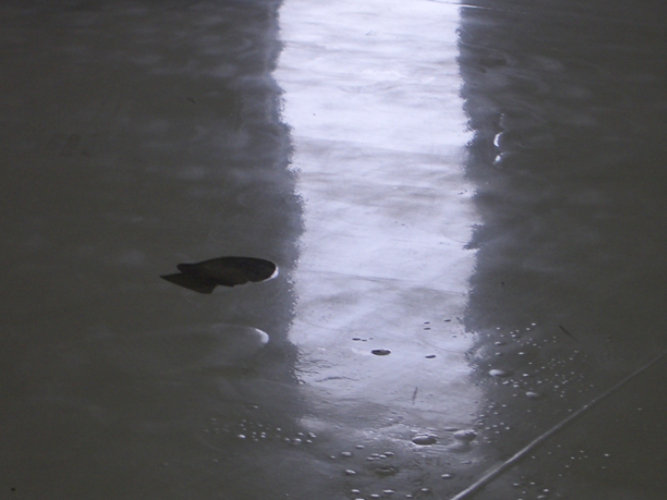
Concrete blisters are small, raised areas or bubbles that form on the surface of freshly placed or coated concrete floors. They often appear as dome-shaped bumps that can vary in size from a few millimeters to several centimeters in diameter. These blisters typically contain trapped air, water vapor or other gases that accumulate beneath a dense surface layer.
In flooring applications, blistering may also refer to disbondment—when a resinous coating separates from the concrete substrate. While both conditions involve trapped pressure beneath the surface, blisters on bare concrete usually occur during finishing, whereas disbondment happens after coatings are applied.
Signs of Concrete Floor Blistering and Disbondment
Early signs of blistering or disbondment can be subtle but often include hollow-sounding areas, raised bubbles or dull patches on the surface. You may also notice a loss of gloss or adhesion in isolated spots. Over time, these areas can expand, leading to widespread coating failure or visible surface delamination. Detecting these symptoms early allows for corrective action before the problem worsens. Regular inspection and testing help identify underlying moisture or adhesion issues.
Why Do Concrete Blisters Form?
Blistering usually occurs when the concrete surface seals prematurely, trapping air or moisture beneath the top layer before it can escape. This can happen due to improper finishing practices, environmental factors or a high water-cement ratio that slows vapor transmission. If surface densification happens too soon, internal gases expand as temperatures rise, creating pressure pockets that lift the surface layer.
When resinous coatings are involved, blistering or disbondment may result from residual moisture vapor transmission (MVT) through the slab. Excess moisture can react with the coating’s adhesive layer, forming bubbles or causing the finish to lose adhesion. Improper curing, insufficient vapor barriers or applying coatings before the concrete has fully dried are among the most common contributors to this issue.
The Role of Moisture Vapor Transmission (MVT)
Moisture vapor transmission occurs when water vapor moves upward through the concrete slab from the ground. When coatings or finishes are applied before the moisture level stabilizes, the vapor pressure beneath the surface can cause blistering or delamination. Measuring MVT using a calcium chloride test or in-situ RH probes ensures the slab’s moisture content is within acceptable limits. Addressing vapor transmission before coating is critical to long-term adhesion and durability.
Preventing Concrete Floor Blisters and Disbonding Problems
Applying a finish to a concrete floor using epoxy, urethane or other polymeric materials provides both durability and enhanced aesthetics. On rare occasions, an installation may experience disbondment. This unexpected development presents problems to owners, contractors, specifiers and material manufacturers alike. The three key areas to focus to prevent disbondment problems are: sub-grade preparation, concrete specification and surface preparation.
Landscape and Sub-Grade Preparation for Concrete Slab
The landscape around the building should allow for proper drainage away from the slab. Below grade concrete must be waterproofed on the exterior using urethane coatings to prevent water from accessing the slab or area beneath the slab. Grades should provide natural flow away from the building and roof drainage must be directed away from the building.
Vapor Barrier for Concrete Slab
The concrete slab sub-grade must be designed to prevent water from accessing the slab. This requires the use of four inches of coarse aggregate to break the capillary flow of water. Two inches of coarse sand is placed over this to fill surface voids and allow for the application of the vapor barrier. The vapor barrier must meet ASTM E 154-88/93 having a minimum perm rating of less than 0.09, as represented by 10-mil polyethylene. Placement of this moisture barrier must be continuous and in compliance with ACI 504. ACI 302 recommends a two-inch layer of dry sand above the vapor barrier. If following this recommend practice, extraordinary measures must be taken to keep this sand dry. If water is allowed to be captured within this sand layer, it will serve as a water reservoir under the slab. In some cases, it may be more advantageous to pour the concrete directly onto the moisture vapor barrier. Wet curing the concrete will prevent slab curl and corner cracks.
Concrete Formulation for Concrete Slab
The concrete itself must below permeability and high density to minimize moisture movement within the slab. The following guidelines will yield a suitable concrete mixture:
| Guidelines | |
|---|---|
| Guidelines Cementitious content | 517 lbs/cubic yard |
| Guidelines Water-cement ratio | 0.40-0.45 |
| Guidelines Maximum coarse aggregate size | 1-1/2" |
| Guidelines Air content | 4-6% |
| Guidelines Slump (without high-range water reducers) | < 3 inches |
| Guidelines Slump (with high range water reducers) | 6-9 inches |
| Guidelines Compressive strength (28 days) | 4,500 psi |
| Guidelines Permeability | Low |
| Guidelines Density | 140 lbs/cubic foot |
| Guidelines Cement options |
Portland Cement Type I Portland Cement Type I with fly ash Portland Cement Type II with silica fume mineral admixture |
| Guidelines Water | Potable clean and free from oil, acids, alkali & organics |
Installing a concrete mix which meets the above criteria will not only prevent problems associated with high porosity concrete but will minimize the risk of Alkali-Silica Reaction (ASR). ASR requires reactive forms of silica or silicate in the aggregates, sufficient alkali (sodium and potassium) from cement and sufficient moisture in the concrete. The reaction of the alkali fluids in the pores with the silica rich aggregate results in the formation of a swelling gel. The resulting pressure will eventually lead to cracks in the concrete.
The concrete should be finished with a light steel trowel. Over finishing the concrete will only bring additional past to the surface, which does not offer a strong, bonding surface. Best results are obtained when the concrete is wet cured for three days using ponding or wet burlap. The concrete must cure for a minimum of 28 days prior to the application of epoxy or urethane flooring systems. This arbitrary length of time has been adopted by most floor finish manufactures based upon laboratory studies indicating that 95% of the excess water will have left the slab by this time. If the environmental conditions are cooler and/or more humid than typical laboratory conditions, this period of time will be longer. Using a calcium chloride test kit (ASTM E-1869) to measure the moisture drive prior to proceeding will help determine the readiness of the slab for coating (Product No. AI 15).
Concrete Slab Surface Preparation (2)
After any decontamination of existing concrete, surface preparation is the same for new construction or existing slabs. Mechanical pulverization using shot blasting is by far the best technique. Acid etching introduces excess water and leaves a salt residue and is not recommended as a preparation technique. The surface profile for coatings, slurries and broadcast systems should be not less than 20% of the thickness of the system. For trowel-applied systems, the surface profile should be not less than 10 mils. For more detailed information refer to ICRI's recent publication on standardized surface preparation. (3)
After shotblasting, inspect the concrete for surface irregularities in need of repair. Use polymer modified concrete (Product No TPM 721) or epoxy fill materials for repair areas. Cracks should be treated with EPO-FLEX (Product No. 3552) and reinforced with six-inch fiberglass cloth (Product No. FT6-50).
The reading obtained from the Calcium Chloride test must be less than or equal to three pounds per 1000 square feet per day at use conditions. Both temperature and humidity will affect this reading. Moisture will migrate through concrete from warm damp conditions to cool dry conditions. The relationship between temperature and humidity is called vapor pressure. Moisture will move from high vapor pressure to low vapor pressure. If the MVT reading is higher than 3#/100sf/24hr, remedial measures must be taken. Raising the temperature of the room and increasing the ventilation prior to placing the flooring material will help remove the excess moisture from the slab. If time is not an option, apply P-105 to help neutralize excess ions and Recover 9000 to increase the density and decrease the porosity of the upper slab surface.
Concrete Slab Priming
Using a good penetrating primer will also help to eliminate disbonding problems. This primer serves to repair some of the micro fracturing of the slab due to the shot blasting. Most primers work through mechanically bonding. They penetrate the pores as a liquid then polymerize as a lock and key model. Some contractors continue to "scrub-in" the primer to assist in the penetration process. In special cases, it may be necessary to work with a pre-primer (Product No. 5531) that actually bond to the substrate when surface bonding is in question.
Following these steps will minimize, if not eliminate, problems associated with disbonding of the flooring system from the slab. In new construction, sub-grade detail and landscape design remove potential sources of water. Placing a dense, non-porous slab with proper curing will minimize moisture vapor movement. And proper surface preparation and priming will provide an excellent bond.
- Guide Specification Cast in Place Concrete for Floor Slabs on Grade that Will Receive Semi-Permeable or Impermeable Finishes (General Polymers Guideline Specification).
- Guideline Instructions for Concrete Surface Preparation (Form G-1).
- Selecting and Specifying Concrete Surface Preparation for Sealers, Coatings and Polymer Overlays, Technical Guideline No. 03732.
How to Repair Blistered or Disbonded Concrete Floors
When blistering or disbondment occurs, the repair process depends on the extent of the damage. Minor blisters can sometimes be removed through localized grinding and patching, followed by a new coating system designed for moisture mitigation. Larger failures often require removing the entire coating, performing moisture testing and reapplying the system with a compatible primer or vapor control layer. Partnering with a flooring expert ensures the root cause—such as vapor pressure or surface contamination—is properly addressed before reinstallation.
Choosing the Right Epoxy or Urethane System for Moisture-Prone Environments
Not all coatings perform equally in high-moisture settings. Selecting a resinous flooring system specifically engineered for moisture tolerance and vapor suppression helps prevent future disbondment. Moisture-tolerant primers, breathable epoxy coatings and urethane topcoats designed for chemical resistance offer long-lasting protection. Consulting a Sherwin-Williams representative helps you match the right system to your site conditions and moisture challenges.
FAQs About Concrete Blistering and Moisture Control
Prevent Moisture Problems and Concrete Blisters with Flooring from Sherwin-Williams
At Sherwin-Williams, our mission is to provide you with flawless flooring solutions that meet the needs of your facility. Our team of experts understands the importance of proper sub-grade preparation, concrete specification and surface preparation and their role in preventing concrete blistering. Contact a Sherwin-Williams representative today to learn more about our methods of preventing concrete flooring moisture problems.
Discover More
Industry Expertise and Innovation
See how we help customers find customized solutions for their project and application challenges.

System Lookup
Find out more about our innovative floor systems for a variety of industries.
FIND A SYSTEM