Revolutionising temperature control: The benefits of thermal insulated coatings in the food and beverage and pharmaceutical industries
By Richard Kay, Segment Leader, Manufacturing and Processing - EMEAI

Insulation is safety critical in food and beverage and pharmaceutical factories, where hot pipes and equipment pose a significant burn risk to workers. Yet traditional approaches often fall short in terms of durability and longevity and can be expensive to install and maintain.
Thermal Insulation Coatings (TIC), such as Heat-Flex® AEB and Heat-Flex® 7000, have the potential to replace bulky materials, such as mineral wool, that can be easily damaged and pose a hygiene risk. Just a relatively thin layer of these easy to apply, easy to maintain solutions can keep exterior surfaces safe to the touch, even in the tightest of spaces.
TICs, then, are emerging as a safer, smarter alternative to conventional insulation systems.
Thermal insulation: Why it matters
In the world of food and beverage pharmaceutical manufacturing, where hot pipes and machinery are ubiquitous, insulation plays a critical role in workplace safety.
Just a few seconds of incidental contact with a hot surface, whether that’s a pipe, ductwork, or tank, is enough to blister and burn skin. Such injuries, which can be severe or even life-threatening, are extremely distressing to workers, their families, and their colleagues. They can also leave companies vulnerable to absence-related drops in productivity and, in some cases, legal action.
First and foremost, effective insulation is key to keeping people safe as they go about their duties. It creates a barrier that reduces heat transfer from hot surfaces to the skin.
In addition, it helps minimise heat loss or gain, ensuring products stay within safe temperature ranges, and keeps energy consumption and costs to a minimum.
Yet traditional approaches, such as mineral wool cladding, come with challenges. When condensation penetrates the barrier, the “dry” insulation becomes “wet”.
This can create major hygiene problems with traditional insulation harbouring bacteria such as listeria that can lead to major problems in busy food and pharmaceutical factories. It also poses the threat of stainless-steel stress corrosion cracking (SCC), that can create major failure and extended downtime in very busy environments. What’s more, conventional methods are expensive to install due to them needing to be welded around pipework to maintain a hygienic seal. They can be fragile, necessitating frequent repairs, and risk-based inspections, in which materials are removed to inspect for signs of SCC, are not only labour-intensive, but also tend to require the wholescale shut down of production processes.

The TIC revolution
TICs are an innovative new approach with the potential to replace systems such as mineral wool. Long-established in the oil and gas industry as a means of burn protection, they are made from materials such as aerogels and epoxy compounds that form a thin, low-conductivity barrier to resist temperature flow.
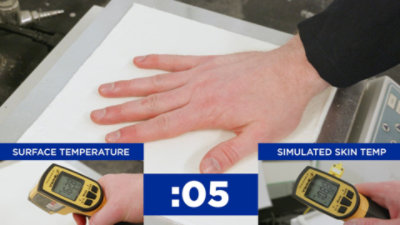
They work by lowering the skin stimulation temperature, i.e. both the surface temperature and the rate of heat transfer, of surfaces, thereby reducing the risk of burns and all their consequences.
But they also are easy to clean and resistant to mould, bacteria, and contaminants, which enhances hygiene and quality standards.
Applied onsite, by brush or spray, for fast seamless coverage on pipework, tanks and associated equipment, TICs provide long-lasting protection from heat, corrosion, and abrasion. They are quick and easy to install, even in small or difficult to reach areas, and treated installations can be moved from risk-based to visual only inspection.
All of this drastically reduces costs and downtime, making TIC a safe and cost-effective long-term alternative to conventional methods.
Safer, cleaner, more cost-effective
TICs are redefining how the food and beverage and pharmaceutical industries manage heat-related risk mitigation. By directly reducing surface temperatures, they help eliminate burn hazards at source, improving equipment safety, while also reducing installation and maintenance costs.
Unlike traditional materials, like mineral wool, thermal coatings offer consistent, safe-to-touch surfaces without the risk of degradation, water ingress, or contamination. They are easier to maintain, better suited to hygienic environments, and more adaptable to complex equipment layouts.
In short, TICs provide a practical, proven, cost-effective safety solution in high-risk, high-performance food and beverage and pharmaceutical environments.
Related Products

Discover More
Industry Expertise and Innovation
Explore customised solutions we deliver for customers to address their project and application challenges.