Best Offshore Coating Practices for Corrosion Control and Asset Longevity
This guide explains how to select and apply offshore coating systems to improve corrosion control, align with maintenance cycles and extend asset longevity in harsh marine environments. Written by offshore coating specialist Chet Garrett at Sherwin-Williams, this article provides practical insight for operators, engineers and maintenance teams working on offshore platforms and production equipment.
Offshore coating performance is shaped by key factors including surface preparation standards, zinc primer selection, epoxy barrier systems, UV-resistant topcoats and lifecycle maintenance strategies. This guide covers how coating approaches differ between new construction and field maintenance, how to manage constraints like humidity and limited access and how to match coating systems to real-world offshore conditions.
Understanding Offshore Coating and Corrosion Challenges
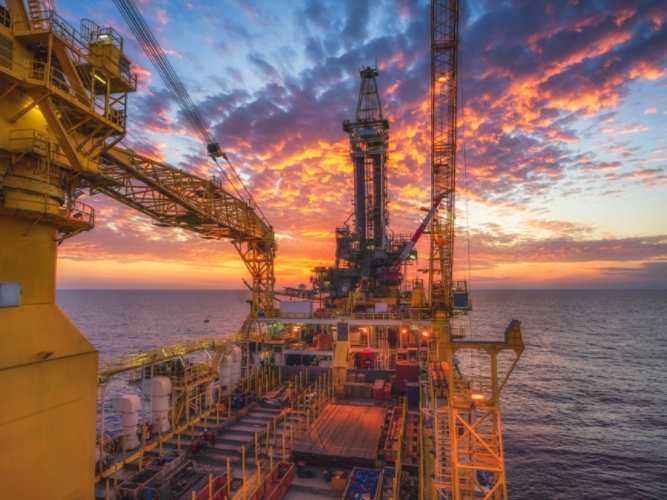
Offshore production equipment operates in one of the most punishing corrosion environments in industrial service. Salt-laden wind, persistent humidity, UV exposure at the waterline, wide temperature swings and limited maintenance access all work against coatings performance. When protection breaks down, the consequences extend beyond surface appearance—maintenance intervals shorten, repair scopes expand and total cost of ownership rises.
Offshore coating approaches rarely count on the luxury of ideal conditions. The right strategy is about aligning protection methods with access, environment and maintenance timing. Systems that perform well in a fabrication shop may not translate directly to a platform, and repair approaches that make sense during a major shutdown may be impractical between cycles.
Every coating failure offshore forces a decision. Can it wait until the next maintenance window? Does it require immediate mobilization? Will a localized defect remain contained or drive a larger repair scope? Understanding how coating strategies differ between new construction and field maintenance allows operators to match protection levels to the asset, the timeline and the access available—and avoid preventable escalation.
Offshore Coating Systems Built for Long-Term Corrosion Protection
Longevity offshore starts with conditions that are easiest to control. New assets fabricated and coated in a shop environment give applicators the ability to manage temperature and humidity, maintain cleanliness and stage work for inspection. Those conditions support higher-end surface preparation—commonly an SSPC-SP 10 near-white abrasive blast—and the application of coating systems designed for long service life.
For most atmospheric steel on offshore rigs and platforms, long-life specifications follow a familiar architecture: an anti-corrosion primer, an intermediate barrier coat and a UV-resistant topcoat. Duty and location drive variations. Assets nearer the waterline may require a heavier barrier build. Hotter surfaces may call for elevated temperature coatings. But for a wide range of structural steel and equipment above the water, the three-coat approach remains the workhorse.
Primer selection is where new construction and maintenance begin to diverge. Inorganic zinc primers are commonly specified for new builds when the goal is maximum intended life. They deliver galvanic protection along with abrasion and heat resistance, but they also depend on the conditions that the shops are designed to provide: fully blasted steel and tighter control of humidity and application variables.
Offshore, those requirements are harder to achieve. Organic zinc primers often become the better fit for maintenance work because they tolerate humid environments more readily and perform reliably when full blasting is constrained by containment, deck space and cost.
Above the primer, intermediate coats provide much of the barrier performance. Flake-filled epoxies formulated with materials such as aluminum flake, glass flake or micaceous iron oxide (MIO) create overlapping platelet structures that lengthen the diffusion path for moisture and oxygen, much like roof tiles layered to shed water.
Topcoats complete the system by protecting the barrier layers from UV exposure and weathering. Polyurethanes remain common, and polysiloxanes continue to gain ground for long-term appearance retention. Offshore, finish stability makes early defects easier to detect and address before corrosion progresses beneath the coating.
Offshore Coating Maintenance Strategies: Adapting to Access, Weather and Repair Cycles
Once an asset moves offshore, coating work becomes defined by constraint. Maintenance is performed in less controllable environments, often with reduced surface preparation, limited access and shifting weather conditions. Wind, humidity and condensation can alter plans mid-shift, while containment and safety requirements add time and complexity to even basic repairs.
These conditions change what effective maintenance looks like. The objective is no longer to replicate shop work in the field, but to select the right repair for the right point in the maintenance cycle.
In some cases, operators do want to bring a system back as close as possible to its original application. That can involve blasting to bare steel and rebuilding a full coating system, sometimes with an inorganic zinc primer, during a scheduled shut-in or major rehabilitation. When feasible, this approach effectively resets protection on high-value equipment.
More often, repairs are designed to bridge to the next planned window. If a comprehensive overhaul is scheduled in two years, specifying a 10-year repair may not be the right investment today. Spot repairs and minimalist preparation can be an intentional strategy to stop active corrosion, stabilize steel and avoid accelerating a shutdown timeline.
Direct-to-metal options can be useful in this role. A UV-tolerant polyaspartic, such as Envirolastic® 940 LV, can serve as a short-cycle solution when the priority is holding performance for a limited period until more thorough maintenance is possible. The value is in preventing localized coating failure from progressing into steel loss.
Subsea tiebacks raise the stakes further because maintenance is rarely practical. Subsea equipment is expensive to lift, service and reinstall, which shifts your coatings strategy toward front-end selection rather than in-service repair. As reservoir lives extend toward 30 years and beyond, subsea systems increasingly rely on coatings that perform beyond minimum requirements, particularly under elevated temperature and immersion conditions.
Standards provide a baseline but not a guarantee. A coating that meets a category requirement does not automatically align with longer intended service life targets, especially when operating conditions exceed original assumptions. In high-temperature immersion scenarios, systems designed to meet or exceed NORSOK M-501 Category 7C requirements are often considered for critical components, including options such as Macropoxy® M922 and Dura-Sub™ C1330 or C1230.
Offshore Coating Cost vs. Performance: Lifecycle Planning and Maintenance Tradeoffs
Offshore coating performance is ultimately judged by economics rather than specifications. Mobilization, containment, safety oversight and weather risk can quickly outweigh material cost. The most robust system is not always the most appropriate; the right approach matches the asset, the access, the crew and the timeline.
A jackup rig illustrates this tradeoff well because operators can choose between offshore maintenance and shore-side rehabilitation. Some perform maintenance offshore by mobilizing crews directly to the rig. Others remove major components for rehabilitation in a more controlled environment onshore. Because jackups typically operate closer to land, it can be feasible to jack the rig up, remove a leg, ship it back for work, reinstall it and repeat the process.
The cost differences can be significant. Mobilizing an offshore maintenance crew—factoring in helicopter transport, rigging, containment equipment and safety personnel—can run into tens of thousands of dollars before coating work begins. Shore-side rehabilitation eliminates many of those costs but introduces others, including transport, demobilization and downtime. When a jackup leg can be rehabilitated in two weeks onshore versus four weeks offshore with weather delays, the controlled environment often compares favorably despite the added logistics.
Offshore work avoids disassembly and transport, but it also adds complexity. Crews may need containment systems to capture abrasives and debris. Work is often performed while suspended above water, with rigging and rescue planning built into the scope. Wind and condensation can compress application windows. While a quality job can still be achieved, it requires careful planning and coatings suited to marginal preparation and high humidity.
Shore-side rehabilitation improves access, staging and safety conditions while supporting more thorough surface preparation. Operators weigh offshore mobilization cost and risk against shipping logistics and downtime, then choose the approach that best fits the schedule and budget.
Sometimes the analysis points toward changing the repair protocol itself. If a field-applied system specified for 10 years of service routinely delivers just five years, it may make more sense to specify a lower-cost, shorter-term approach than to repeat the same expense without the intended return. Ease of application becomes a major lever in that equation. Simpler systems can reduce labor hours and cut the number of ways field work can go wrong.
One-part moisture cure urethanes are a practical example. They do not require mixing multiple components—which reduces setup time, container handling and the risk of incorrect ratios. What’s more, these formulations are engineered to cure in the presence of atmospheric moisture. In humid offshore conditions where traditional two-part systems may struggle, moisture-cure products can reduce weather-related delays and rework tied to humidity sensitivity.
Systems built around one-part products such as Corothane® I GalvaPac primers allow crews to recreate multi-coat protection with fewer steps and less mixing complexity, including topcoats intended for high humidity. When properly applied, these systems can deliver service life measured in decades even under challenging offshore conditions, while keeping installation costs contained.
For spot repairs and emergency maintenance, application simplicity becomes even more paramount. Cartridge-based repair systems such as Repacor™ SW-1000 allow two-component materials to be mixed at the point of application using a standard caulking-gun format. Eliminating open mixing, pot life management and extensive cleanup can significantly shorten response time, particularly when access is limited and weather windows are tight.
Improving Offshore Safety with Protective and Thermal Coating Systems
Coating strategy offshore is often discussed in terms of asset protection, but it also shapes safety and day-to-day workflow on deck. Hot piping, pumps and tanks create burn hazards that must be managed in tight spaces. Traditional protections such as caging and bulky insulation systems reduce risk, but they also consume clearance where access already comes at a premium.
Thermal insulative coatings offer an alternate approach. Instead of surrounding hot assets with physical barriers, a coating can be applied at a specified thickness to reduce surface temperature and provide personnel protection. Heat-Flex® 7000 is designed for this purpose, allowing operators to replace certain caging or insulation approaches with a coating-based solution that helps reclaim space and improve access.
A related option, Heat-Flex® AEB, adds the ability to retain process heat while still providing burn protection, with performance on assets running up to 350°F. Even when heat retention is not the primary goal offshore, thermal barrier properties can support condensation control. In warm offshore climates, sweating pipe runs are common for much of the year—creating persistent drips, slip hazards and complications for maintenance work in the vicinity. By reducing surface temperature differentials, thermal barrier coatings can lower condensation potential, improving deck conditions and helping crews maintain drier work zones.
Safer working environments can also be supported by maintenance and repair systems designed to minimize time and complexity in the field. For example, the Repacor™ SW-1000 repair system allows crews to complete splash zone repairs with a surface-tolerant, one-coat application that requires less preparation than traditional systems. By reducing setup, rigging, containment, mixing and application time, these repairs shorten exposure during overwater work, helping lower the risks associated with working above open water.
Offshore coating work will never be simple. The environment is harsh, access is limited and operating conditions are variable. But when coating strategies begin with controlled shop fundamentals, adapt to field constraints, respect life-cycle economics and address personnel safety alongside asset protection, coatings become a practical tool for extending equipment life and reducing avoidable downtime.
The choice between a shop-applied inorganic zinc system and a field-friendly organic alternative, between full restoration and tactical spot repair, or between traditional insulation and thermal coating protection is not about better or worse. It is about matching the solution to the asset, the access and the operating reality.
Offshore Coatings FAQ: Corrosion Control, Systems and Maintenance
What Is the Best Coating System for Offshore Environments?
The best offshore coating system depends on location, exposure and maintenance access, but most include a zinc primer, epoxy intermediate and UV-resistant topcoat for long-term corrosion protection.
Why Are Offshore Environments So Corrosive?
Salt spray, high humidity, UV exposure and temperature fluctuations accelerate corrosion, making offshore assets one of the most aggressive environments for protective coatings.
What Is the Difference Between Inorganic and Organic Zinc Primers?
Inorganic zinc primers offer maximum durability in controlled environments, while organic zinc primers are more tolerant of field conditions like humidity and limited surface preparation.
How Often Do Offshore Coatings Need Maintenance?
Maintenance cycles vary based on exposure and system design, but inspections are ongoing, with repairs often aligned to scheduled shutdowns or operational windows.
What Coatings Are Used for Subsea Equipment?
Subsea systems typically use high performance coatings designed for immersion and elevated temperatures, including systems that meet or exceed standards like NORSOK M-501.
Can Offshore Coating Repairs Be Done Without Full Blasting?
Yes, many maintenance strategies use spot repairs or surface-tolerant coatings to extend performance until full rehabilitation is feasible.
Choosing the Right Offshore Coating System with Sherwin-Williams
Offshore coating success comes down to alignment—matching the right system to the asset, environment and maintenance reality. From new construction to in-service repairs, every decision impacts performance, safety and long-term cost.
Working with experienced coating specialists helps operators navigate these variables with confidence. Sherwin-Williams provides a full portfolio of offshore coating technologies, technical expertise and field support to help extend asset life, reduce maintenance risk and optimize coating performance across the entire lifecycle.
Contact Sherwin-Williams to discuss your offshore coating challenges and get expert guidance on selecting the right system for your asset, environment and maintenance strategy.
ABOUT THE AUTHOR
Chet Garrett is the Offshore Coatings Specialist for Sherwin-Williams Protective & Marine based in Ponchatoula, Louisiana. He has approximately 10 years of service dedicated to protective coatings as an industrial painting contractor, inspector, project manager and Sherwin-Williams energy team member with a specialty in offshore assets. Contact: Chet.A.Garrett@sherwin.com
Discover More
Industry Expertise and Innovation
See how we help customers find customized solutions for their project and application challenges.


Our Oil & Gas Expertise
Explore our industry solutions and technology to help protect your assets.
LEARN MOREProduct Lookup
Find out more about our innovative coatings for a variety of industries.
FIND A PRODUCT