Polyurethane Flooring Stands Up to the Heat at Sugar Manufacturing Facility
Heavy-duty FasTop® RS69 flooring system provides long-lasting protection beneath new heat exchanger equipment.
When a major manufacturing facility in the UK installed new decarbonation evaporator equipment, the ground floor beneath the heat exchangers required significant refurbishment.
Years of exposure to sugars, water and process liquids had left 290m² of concrete flooring eroded and cracked. With new equipment being installed, this facility required a flooring system capable of providing durable protection in a particularly demanding process environment.
The Challenge
The existing floor presented several challenges. Alongside substantial deterioration of the concrete substrate, the area incorporated concrete equipment plinths, drain channels and upstands that needed to be carefully integrated into the finished flooring system.
The new floor needed to provide very heavy-duty performance, remain impermeable to sugars and water, provide slip resistance and withstand the thermal conditions encountered within the plant. Steel sections cast into the sub-floor presented an additional complication because their removal was impractical and they created a potential risk of reflective cracking through the new floor.
There was also a demanding installation schedule. The flooring works had to take place within a live factory environment, alongside the wider plant installation, in just two weeks.


The Solution
FasTop RS69 very heavy-duty 9mm polyurethane screed was specified for 290m² of flooring. The resin-rich system provides protection throughout its full thickness, helping the floor remain impermeable to sugars and water even if the surface becomes chipped, while offering the durability and thermal resistance required in demanding process areas.
Thorough substrate preparation was critical. The slab and concrete plinths were prepared using vacuum-controlled scabbling and diamond grinding to remove laitance, contamination and deteriorated concrete and create a mechanically keyed surface. Damaged areas around drains, floor edges and cracks were cut out to sound concrete and reinstated with repair mortar.


To help mitigate the risk of reflective cracking, the lines of steel sections remaining within the sub-floor were treated with a moisture-tolerant primer and reinforced using GRP matting encapsulated in resin. Anchor rebates were also formed around the floor perimeter, drains and upstand details to securely lock the polyurethane screed into the substrate.


After moisture levels and climatic conditions had been checked, a moisture- and oil-tolerant epoxy primer was applied before FasTop RS69 was installed by trowel at a nominal 9mm thickness. Existing falls in the substrate were followed to maintain drainage to the channels.


FasTop RS69 was also applied to the tops of equipment plinths, while vertical surfaces were finished using polyurethane render mortar. Radius coving was formed at vertical-to-horizontal junctions, eliminating internal corners where process liquids and contaminants could otherwise collect and helping make the finished area easier to clean.


The Results
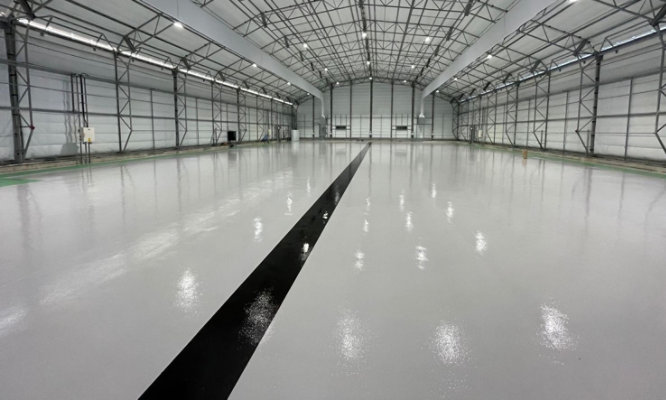
The completed system provides the facility with a seamless, very heavy-duty polyurethane floor designed for the challenging conditions beneath its new heat exchanger equipment.
Careful detailing around plinths, process pipework, upstands and drainage channels creates a more complete protective finish across a complex industrial environment. Existing floor joints were reflected through the new system and reinstated with polyurethane jointing compound, while drain edges and the locations of sub-floor steels were chased and sealed. Yellow demarcation was subsequently applied around plinth edges and potential trip hazards to provide clear visual identification.
Despite flooding in the work area during the project, the flooring installation was completed in ten working days, keeping the work within the original two-week programme.


By combining extensive substrate preparation and repair with a FasTop RS69 polyurethane screed system, the project transformed a heavily eroded process floor into a robust, seamless surface ready to support the demands of the new heat exchanger installation.
The finished floor delivers the combination of durability, impermeability, thermal resistance, slip resistance and cleanability required for a demanding process environment, with detailed coving, sealed joints and integrated drainage helping provide long-term protection across the 290m² installation.
All images courtesy of Corroless Eastern Ltd and used with permission.
Discover More
Industry Expertise and Innovation
See how we help customers find customised solutions for their project and application challenges.