From Reactive Repairs to Preventive Planning
How Site MRO Evaluations Help Manufacturing Facilities Prioritize Maintenance and Stop Losing Ground to Deferred Work
by Daniel Jochum, Asset Protection Manager, Manufacturing & Processing, Sherwin-Williams Protective & Marine

Large plants don’t run out of maintenance needs. They run out of time, labor, shutdown windows and patience.
At site scale, coatings work rarely fails in one clean way. It fails in fragments – a pipe rack that has been touched up three times, structural steel that looks fine from 10 feet away, a tank farm edge that has been quietly eating itself for years, a containment area everyone knows about but no one owns. Different departments see different problems. The loudest issue usually gets attention. The most visible deterioration gets funded. A repair gets pulled forward because leadership is coming through or because a shutdown window finally opened.
Meanwhile, the less obvious assets keep moving toward bigger scopes – and the repair window that could have been planned around closes.
A site MRO (maintenance, repair and operations) evaluation gives plant teams a common reference point for deciding what comes first. It documents conditions in context – what is failing, what it’s exposed to, how critical it is and when it can realistically be addressed. Instead of a patchwork of one-off repairs, it produces a prioritized plan: what needs action now, what belongs in the next outage window and what can be monitored and scheduled later. It also helps identify where a more durable system can extend the maintenance interval and reduce repeat work.
On a big site, that kind of sequencing is the difference between planned work and forced work. When budgets are tight and downtime is expensive, the question is usually whether someone did the sequencing before the window opened or after.
The Patchwork Problem
At plant scale, maintenance planning gets complicated fast. Many facilities operate more like small cities than single sites – different departments running on different schedules, with different ideas about what qualifies as urgent.
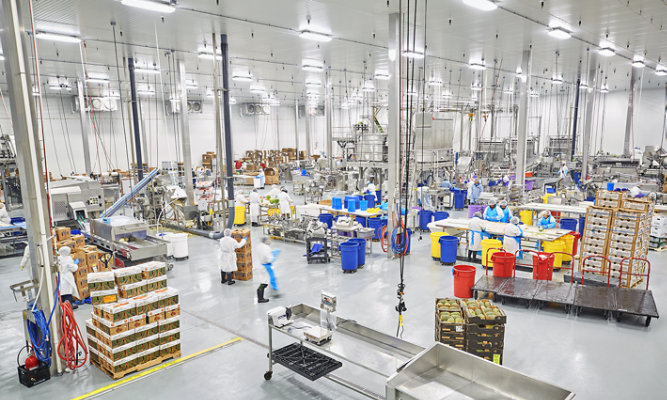
Automotive plants, aerospace manufacturing campuses, foundries, food and beverage operations and large general industrial facilities can span millions of square feet, with very different operating environments inside the same fence line. One area sees chemical exposure, washdown or thermal cycling. Another is mostly atmospheric (Figure 1). One asset is tied directly to production and hard to take offline. Another may look rough but still has time before it becomes a real risk.
Coatings age unevenly – the exposure in one part of the facility can look nothing like what’s happening 200 feet away – while multiple departments compete for the same maintenance dollars. In larger facilities especially, department heads are often drawing from the same maintenance budget without much visibility into what anyone else is spending or why. The money gets exhausted. The planned work doesn’t happen. And the assets that carry the most risk may not be the ones that got funded.
Crews return to the same trouble spots because those are the ones everyone recognizes. Similar assets get treated differently from one department to the next. Surface preparation standards drift. One project gets approved because it is attached to a local concern, while another gets pushed even though the downside of continued deterioration is greater. Work gets completed, but the facility does not necessarily get easier to maintain.
Figure 1. Large manufacturing and processing facilities often house very different operating environments – chemical exposure, washdown, thermal cycling – within the same building, each placing different demands on coatings systems.
Over time, the costs compound: labor returns to the same areas, materials get used more often than they should and shutdown opportunities get missed or spent on the wrong scope. At some point, someone must explain why the same area has been in the maintenance budget for many years in a row.
Most plants will always operate across a mix of four types of maintenance: scheduled, unscheduled, emergency and preventive. But preventive maintenance tends to deliver the most value when a facility can support it. Repairs are smaller. Downtime risk is lower. Budgets become more usable because they are built around planning rather than surprise. The problem is execution: preventive work is hard to do without a clear picture of what exists across the site, what condition it is in and which repairs deserve priority.
A Sitewide View
A site MRO evaluation gives plant teams something they often do not have: a consistent way to look at the whole facility at once – not department by department, but as a single maintenance problem. Done well, it is much more than a walk-through and it is not a product pitch.
Often, the work starts before anyone sets foot in the building. A quick Google Earth pass can reveal the asset base from the outside – tanks, secondary containment, pipe racking, mechanicals, the roof line – and provide a working picture of the site before the first conversation happens. From there, the evaluation picks up with the site as it exists today: where coatings are in place, what they are protecting and how those systems are performing in real service conditions. That can include piping and pipe racks (Figure 2), structural steel, floors, tanks, galvanized components, containment areas, utility spaces and other infrastructure. The goal is not to make a photo album of deterioration but to flag where the trajectory suggests something is about to become costly.
Appearances can be misleading. A blistered or rusting surface may look urgent, but the practical questions are more specific. Is the asset tied to production reliability or safety? Is it seeing chemical exposure, washdown, abrasion, heat or UV? Does repair require an outage, a permit or a shutdown window? Without that context, plants end up treating symptoms – and rebuilding the same list again next year.
A thorough evaluation also produces a working package: product data sheets, technical bulletins, repair recommendations, surface preparation guidance, system options with performance rationale, scope language that makes bid packages more consistent, industry life cycle references, relevant SSPC standards and a priority coatings plan that separates what needs action now from near-term and longer-range work.
The evaluation can also surface regulatory exposure – unlined secondary containment, infrastructure that no longer meets current standards or areas previously flagged in EHS audits – before an EPA or USDA inspection turns it into a citation. A documented coatings plan shifts that conversation from reactive remediation to managed risk (Figure 3).
Choosing What Comes First
Most plants do not struggle to identify what needs attention. They struggle to rank it across departments, schedules and competing definitions of what is “urgent.”
Large facilities have multiple department leaders advocating for repairs in their own areas. Some requests are legitimate and time sensitive. Others make sense locally but carry less consequence than they appear to when viewed in isolation. Without a shared way to compare needs, maintenance dollars tend to follow what is most visible, most immediate or most politically uncomfortable – not what protects the facility. A site MRO evaluation provides the common framework that changes that: separating work that needs action now from work that belongs in the next shutdown window and from work that can be monitored and scheduled later.
That sorting changes the conversation. Not every corroded surface carries the same consequence. Plant engineers will sometimes point to a heavily corroded asset and say as much: if that asset goes down, it could cost a few million dollars a day – so it only gets addressed when it becomes catastrophic. That’s a legitimate answer. There are processes that simply can’t be taken offline for maintenance, and planning must account for that. But everything else can be mapped, ranked and addressed on a schedule that the facility controls rather than one that gets forced on it.
Prioritization also means matching work to how the plant operates: bundling similar assets under one mobilization instead of handling them separately, making early repairs before deterioration drives heavier surface preparation and longer downtime, and deferring what can genuinely wait. The evaluation helps teams make those calls, document why – and avoid rebuilding the same list from scratch every quarter.
When the full scope is visible, spend can be allocated across quarters and shutdown schedules rather than approved reactively. Urgent repairs still happen. The difference is that urgency stops dictating the entire agenda.
Reliability problems tend to build quietly. By the time a coating issue becomes impossible to ignore, the repair is usually more disruptive – and more expensive – than it would have been six or 12 months earlier. A disciplined priority plan does not eliminate uncertainty. It preserves options.
Built to Last
One thing that comes up consistently in site evaluations: the definition of “good enough.” In some areas, a basic repair is enough to stabilize an asset and buy time. In others, the cheapest fix is the one the facility ends up paying for repeatedly. The value is knowing the difference before the work gets scoped and bids go out.
Exposure is rarely uniform – foundries, aerospace facilities, automotive plants and multi-process campuses can see moisture, chemicals, washdown, abrasion and temperature swings in adjacent areas of the same site. When the repair strategy doesn’t match those conditions, the asset may get repaired, but the maintenance cycle doesn’t change (Figure 4).
The question is how often a crew has to come back to the same asset with the same access issues, permits and prep work.
At one large automotive plant, the answer to that question was every year and a half. A 16,000-square-foot containment area – one that handled 32 different chemical commodities – was getting repaired on a rolling basis at roughly $20,000 to $30,000 a cycle. When the engineering team asked for a more durable system, the upfront spend was around $130,000. But the expected service life jumped to five to 10 years. The math was not complicated. What changed was having the data to make the case.
When a higher-performing system meaningfully extends the maintenance interval on the right asset, the economics follow: less labor tied up in the same locations, fewer shutdown complications, lower material use and a smaller waste stream over time. None of that means every asset needs the most robust system available. It means choosing durability where it pays off – and staying simple everywhere else (Figure 5).
For facilities with sustainability targets, those same gains carry additional weight. Longer intervals mean fewer coatings purchased, less material routed through hazardous-waste channels and a smaller carbon footprint from repeated mobilizations and disposal. Some global manufacturers have used life-cycle data from a site evaluation to document progress toward waste-stream and carbon-reduction goals.
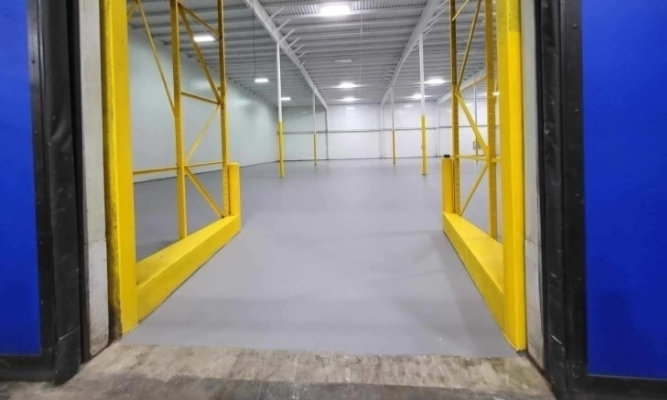
Figure 2. A site MRO evaluation considers the full range of coated assets across a facility – from floors and walls to structural steel and overhead surfaces – and documents how each is performing in actual service conditions.
Figure 3. Infrastructure details such as drainage design and coating integrity around drains are commonly identified during a site evaluation. Addressing these items proactively helps facilities stay ahead of regulatory and environmental health and safety requirements.
Figure 4. Aggregate broadcast into a resinous floor system provides skid resistance in wet processing areas. An MRO evaluation may flag flooring for skid-resistance testing as part of a broader review of facility safety conditions.
Figure 5. Consistent floor coatings, line markings and color coding are the kind of details a site MRO evaluation can help standardize across a facility – supporting more predictable maintenance and more uniform bid packages. |
A site MRO evaluation can also close a gap that shows up across plant types: MRO and CapEx solving different problems with different budgets. Construction projects often get coated to meet schedule and first-cost targets. Maintenance teams inherit those assets and spend years dealing with what does (and does not) hold up in service.
At one large pharmaceutical manufacturer, the MRO team’s frustration was focused on coatings on new construction that were not holding up to the sanitizers and sterilizers their processes required. The solution was to map the entire facility – admin areas, clean rooms, pipe racks, mechanical rooms, floors – create a standardized guide and then convert it into a specification document their architectural and engineering partners could use for new builds. The CapEx team started specifying the same systems the MRO team had already validated. New coatings matched legacy coatings. Touch-ups replaced full repaints. New assets stopped arriving with the wrong baseline.
From Firefighting to Foresight
The goal is control over scope and timing – and how often crews have to come back to the same assets. That holds across plant types – automotive, aerospace, foundries, food and beverage, pharmaceutical and heavy general industrial. The asset base varies; the constraint does not: large, varied infrastructure under different exposures, finite maintenance dollars and limited tolerance for downtime.
A site MRO evaluation gives plant teams a clearer picture of condition and consequence and turns it into something actionable: fewer repeat mobilizations, less rework and longer intervals between major touchpoints on the same assets.
When owners and engineers have the data, they want to do it right. What gets in the way is visibility: what’s there, what condition it’s in and what it will cost to let it go.
Coatings maintenance stops being a string of isolated fixes and becomes part of the facility’s reliability planning – tied to uptime, shutdown schedules and how maintenance dollars get spent. For the engineers and maintenance leaders responsible for keeping it running, that means fewer repeat repairs, clearer budget conversations and a planning cycle that actually gets easier over time.
ABOUT THE AUTHOR
Daniel Jochum is Asset Protection Manager, Manufacturing & Processing, for Sherwin-Williams Protective & Marine. He is a veteran operations, sales and asset protection leader with more than 25 years of experience in the coatings and manufacturing industry. In his role, he drives risk mitigation, operational integrity and maintenance optimization plans across complex manufacturing environments. He also supports commercial growth as a Protective & Marine Coatings Sales Representative, partnering with industrial and infrastructure clients on high-performance solutions. He holds a bachelor’s degree in accounting from the University of Southern Indiana and is recognized for his strong analytical capability, cross-functional leadership and commitment to safety and performance. Contact: Dan.R.Jochum@sherwin.com
Discover More
Industry Expertise and Innovation
See how we help customers find customized solutions for their project and application challenges.

Industry Solutions
Explore technology and innovation to protect your most valuable assets.
LEARN MOREProduct Lookup
Find out more about our innovative coatings for a variety of industries.
FIND A PRODUCT